
April 5, 2026
HTCs, LIHTCs Preserve Historic
Housing in New Orleans
MARK O’MEARA, SENIOR COPY EDITOR, NOVOGRADAC
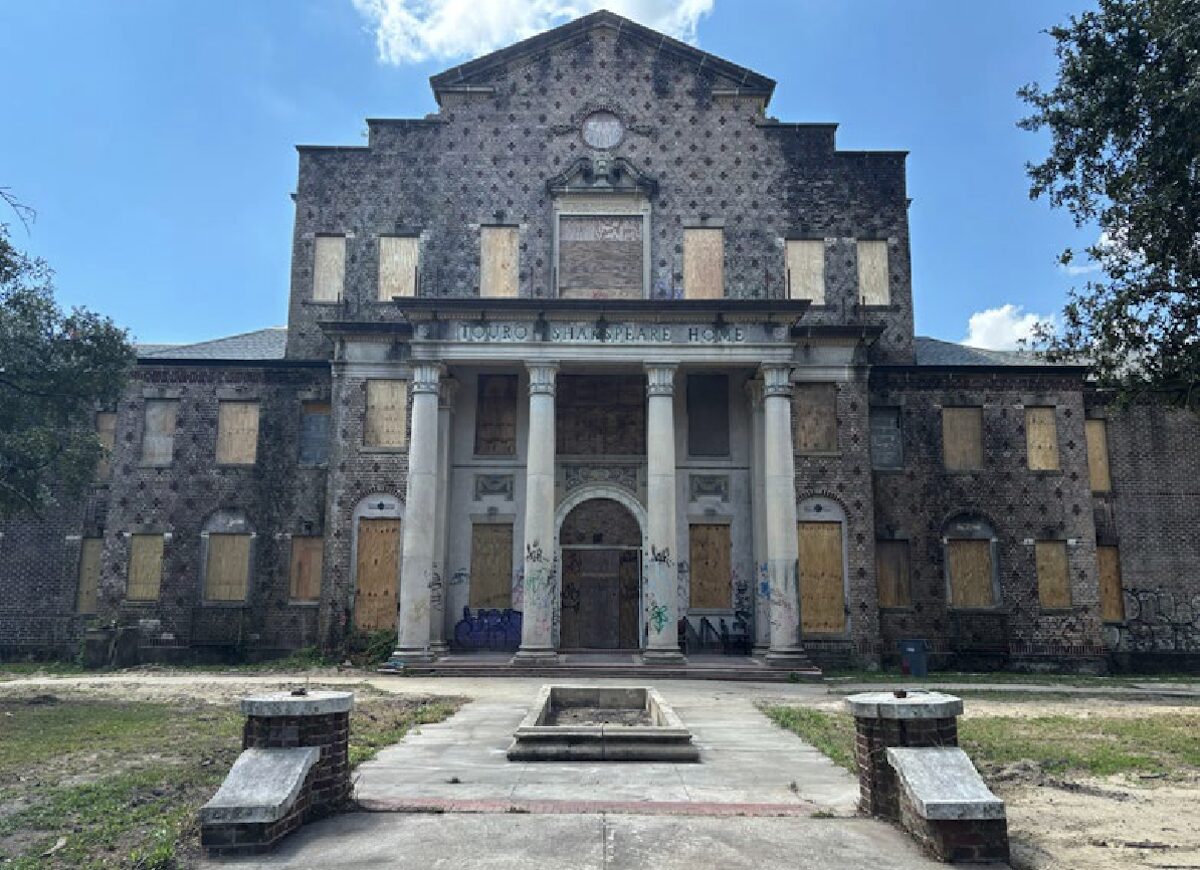
Thanks to a developer with a vision and an array of tax credits, the Touro-Shakspeare Home, a former almshouse in the Algiers neighborhood of New Orleans, is being rehabilitated and converted into 52 apartments for low-income seniors.
“This was a phoenix-style project. It is rising from the ashes,” said Josh Collen, president of HRI Communities, about bringing this historic structure back to life. “It has helped seniors throughout its history.” HRI Communities is a full-service real estate development company based
in New Orleans, with affiliated architectural design and property management services companies, and is a national leader in the adaptive reuse of historic structures.
“This is a very unique and historic project that is significant to the community,” said Amanda Ward, managing director at First Horizon Community Investment Group, which provided federal low-income housing tax credit (LIHTC) and federal historic tax credit (HTC) equity to this
development. “This project is absolutely beautiful. There’s so much history and this rehabilitation removes a blighted building from the community.”
Development Details
The current version of the Touro-Shakspeare Home, a three-story, 70,000-square-foot structure, was designed by architect William Burk in a Jacobean Revival-style with neoclassical elements. The property sits on 7 acres and is surrounded by oak trees and open space.
The property will include 52 one-bedroom apartments reserved for seniors 62 and older. Furthermore, all apartments will be available at or below 50% of the area median income and will have project-based Section 8 vouchers from the Housing Authority of New Orleans. Collen said apartments will be modern, with in-unit washing machines and dryers.
The rehabilitation will include resiliency-focused design features that will meet several building standards, including Enterprise Green Communities certification, EnergyStar
certification, International WELL Building Institute certification and an IBHS Fortified Roof certification. The building will have two elevators and a natural gas generator.
Collen said that the generator will power the community room and the refrigerators in all apartments as part of the property’s storm resiliency protocol.
The former chapel on the property will convert into a multipurpose community room. The property will include on-site parking, two courtyards and 3 acres of open space that will feature community gardens, walking paths and seating areas integrated into the landscape. Tenants will have easy access to public transportation as there is a historic archway that acts as an entrance at the front of the property. The archway serves as a bus stop as well.
The final stage of the redevelopment began in December 2025 and will be completed in early 2027.
To get the property ready for rehabilitation was no easy task. HRI Communities spent 10 months doing structural work to stabilize the building. Collen said that the second floor had collapsed onto the first floor. “We were looking for investors, but we couldn’t show them the building,” said Collen.
This stabilization work was financed through a $6 million loan from the city of New Orleans.
Preserving History
When Judah Touro, a prominent Jewish philanthropist and businessman, died in 1854, he included in his will an $80,000 gift to build an almshouse in New Orleans. Its first iteration was a Gothic castle-style structure built in 1862. The building burned down near the end of the Civil War,
after a fire broke out in a makeshift kitchen. After the war, the almshouse’s assets were transferred to the city with a provision restricting their use to affordable housing, as Touro intended.
With the help of revenue from New Orleans Mayor Joseph Shakspeare’s gambling tax and federal compensation, the property reopened, operating from 1883 until 1927. The building then served as a city-owned nursing home prior to Hurricane Katrina but has been vacant and decaying ever since.
Thanks to federal and state HTC equity, many of this property’s historic features will be preserved. Restoration work will include preserving the brick exterior and restoring the indoor corridors and the historic volume of the site. Collen said a point of emphasis was restoring the chapel to its original grandeur, including all of the terrazzo and plaster details. “We want to make sure the chapel is as close to its original design as possible and that all the detail and the plaster work looks original,” said Collen.
Financing
First Horizon Community Investment Group provided $8.7 million in 4% LIHTC equity and $4.6 million in federal HTC equity. “We are a Community Reinvestment Act- (CRA-) motivated investor. We have CRA need in New Orleans,” said Ward. “With a different developer, this could be a scary project. But our long-term relationship with HRI Communities made us very comfortable with this project.”
Stonehenge Capital provided $6.1 million in state HTC equity ($1.3 million from stabilization phase, $4.8 million from renovation phase). “Stonehenge’s bread and butter is historic tax credit investments,” said Patrick West, vice president of Stonehenge Capital. “We really like the
impact that it has on the community. We are a Louisiana-based company. This investment is in our backyard, and it will serve as a great example of historic preservation in
Louisiana done the right way.”
Boston Capital Finance provided $16 million in tax-exempt bonds that will be paid down to $2 million and converted into a permanent loan. “This project checks all the boxes,” said Sean Curry, partner and director of originations and investments at Boston Capital Finance. “The market metrics were attractive to us. … This is a historic project that fell into disrepair over the years. We will enrich the lives of the tenants by preserving this building.”
Financing for the rehabilitation of the Touro-Shakspeare Home also included $5 million in Community Development Block Grant-Disaster Relief program financing from the Louisiana Housing Corporation in partnership with the Louisiana Office of Community Development as well as a $6 million loan from the city of New Orleans.
TOURO-SHAKSPEARE HOME
FINANCING
- $16 million in tax-exempt bonds that will be
paid down to $2 million and converted into a
permanent loan from Boston Capital Finance - $8.7 million in 4% low-income housing tax credit equity
from First Horizon Community Investment Group - $6.1 million in state historic tax credit (HTC) equity from
Stonehenge Capital ($1.3 million from stabilization
phase, $4.8 million from renovation phase) - $6 million loan from the city of New Orleans
- $5 million in Community Development Block
Grant-Disaster Relief financing from the Louisiana
Housing Corporation in partnership with the
Louisiana Office of Community Development - $4.6 million in federal HTC equity from First
Horizon Community Investment Group
